.
Showing posts with label Technology. Show all posts

Monday, April 16, 2012

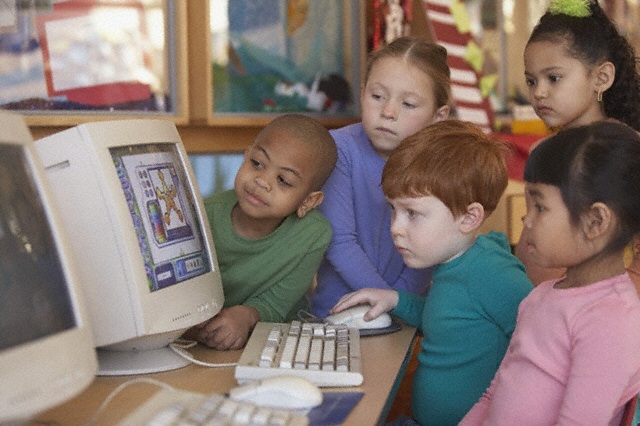
Using Technology in the Early Childhood Classroom


By Kimberly Moore Kneas, Ph.D. and 
Bruce D. Perry, M.D., Ph.D.
Early Childhood Today: Are young children's brains (ages three through six) well suited to the use of technology? (We define technology as children using cameras, computers, tape recorders and video cameras in classroom projects.) If so, how? Are some forms of technology better than others for these specific age levels?
Dr. Perry: In order to answer that question we must consider some of the genetic biases of the human brain. For 99 percent of the time we have been on the planet, we lived in small hunter-gatherer groups of about 40 to 50 people. Our brains developed specialized capabilities for social affiliation, communication and various kinds of symbolic representation. Our cultures evolved through social interactions, initially without written language. The development of written language changed the way human beings developed, in large part by influencing brain development and expressed new brain-mediated capabilities that had previously been un-expressed.

I see technology doing the same things today. The brain clearly could not have a "genetics" specific for the use of a joystick. Nor could the brain have a genetics specific for continuous attention to a two-dimensional moving image such as those in the television. Yet external symbolic representation such as the written word, visual images on television, and complex three-dimensional videography are all sensed, processed, stored, and acted on by the human brain. Because the brain literally changes in response to experiences, these "new" (from a historical perspective) experiences (the written word or television) cause changes in brain development, brain organization, and brain function that were never expressed hundreds of generations ago.
Modern technologies are very powerful because they rely on one of the most powerful genetic biases we do have — the preference for visually presented information. The human brain has a tremendous bias for visually presented information. Television, movies, videos, and most computer programs are very visually oriented and therefore attract and maintain the attention of young children.
The problem with this is that many of the modern technologies are very passive. Because of this they do not provide children with the quality and quantity of crucial emotional, social, cognitive, or physical experiences they require when they are young. The developing child requires the right combination of these experiences at the right times during development in order to develop optimally. This cannot happen if the child is sitting for hours passively watching television.
Sitting young children in front of a television for hours also prevents that child from having hours of other developmental experiences. Children need real-time social interactions; technology such as television can prevent that from happening.
On the other hand there are many positive qualities to modern technologies. The technologies that benefit young children the greatest are those that are interactive and allow the child to develop their curiosity, problem solving and independent thinking skills.
ECT: Do you see the use of specific things like computers as part of an early childhood curriculum as being powerful enough to change brain development the same way you've just described television?
Dr. Perry: Absolutely. I think the difference between computers and television is that television tends to be quite passive. You sit and you are watching and things are happening in front of you but you don't do anything. Children are natural "manipulators" of the world — they learn through controlling the movement and interactions between objects in their world — dolls, blocks, toy cars, their own bodies. With television, they watch and do not control anything. Computers allow interaction. Children can control the pace and activity and make things happen on computers. They can also repeat an activity again and again if they choose.

ECT: As you look at 3-, 4-, and 5-year-olds being offered opportunities like using cameras and tape recorders and video cameras in the classroom, do you think that based on your comments earlier on how children develop with real-time activities, do you think they have the capability of understanding and using those tools well?
Dr. Perry: That's actually a really good question. Preschool children are still having significant cognitive growth. In a very real sense, children think differently than adults. This is so because their brains have not yet completely developed. So to tape a conversation and replay it for an adult means something entirely different than when a three-year-old hears their voice on a tape. These experiences can be very positive and mind-expanding for a child — as long as they are done at the right time.
Children need real-life experiences with real people to truly benefit from available technologies. Technologies should be used to enhance curriculum and experiences for children. Children have to have an integrated and well-balanced set of experiences to help them grow into capable adults that can handle social-emotional interactions as well as develop their intellectual abilities.
I think that balance and timing are the keys to healthy development. Provide the right kinds of experiences at the right time. For example, if you take a newborn and do not hold that infant and put her in a seventh grade classroom and leave her for the afternoon, it's not a good experience. It can actually be abusive. But, if you take the 14-year-old child and rather than having them spend the afternoon in school, you hold and rock them all afternoon, that is not the right experience at the right time for that child. When a six-month-old child is strapped into a chair in front of a videotape designed to teach them a different language, that is a different experience than an eight-year-old child listening to the same tape. The infant's experience would be totally inappropriate, but the eight-year-old's may be great. What's important is when experience is provided and how it's mixed in with other crucial experiences.
ECTYour comments begin to address an issue that's important today. As we move into the 21st century with pressure to gain experiences in technology, specifically computers, would you address how parents and early childhood educators could specifically work together to create this balance for young children?
Dr. Perry: While technology can help us teach children, in the end our children learn from us. Parents and teachers must act as facilitators in children's learning. For example, sitting down together and using playing cards is a very cognitive experience. They can learn how to add, they can learn how to predict, they can laugh, and they can learn how to win. In their interaction with a parent they're using this externalized object which is a playing card and a game. A very similar thing can happen with emerging technologies. I believe parents and teachers can take advantage of the interactive qualities of a computer to enhance the experiences available to children.
As parents think about the future they need to realize two things: technology is not going to go away and we are in the midst of a major sociocultural quantum shift. These technologies are revolutionizing the world our children will live in. So our task is to balance appropriate skill-development with technologies with the core principles and experiences necessary to raise healthy children.
We must keep the core principles of healthy development in mind as we incorporate these technology and tools. If we do that we'll be fine. And at the heart of any healthy child is the opportunity for enriching and nurturing interactions with other human beings. I think the key to making technologies healthy is to make sure that we use them to enhance or even expand our social interactions and our view of the world as opposed to using them to isolate and create an artificial world.
Unfortunately, technology is often used to replace social situations and I would rather see it used to enhance human interactions. And I think that can happen.
ECT: Earlier you began to discuss some of the pitfalls that you see with respect to using technology with children. Do you have any other thoughts or anything you would specifically like to cover there?
Dr. Perry: One of the obvious issues that all parents and even the people that develop multimedia material struggle with is controlling access to content that may not be developmentally appropriate. There are going to be computer programs and sites on the Internet and television shows that have content that may be appropriate for an 18-year-old, but very inappropriate for a preschool child. It means that in an environment where there is not parental control or the possibility for supervision, a child may have access to content that has extreme violence or presents inappropriate or destructive concepts such as racism, misogyny, or age-inappropriate sexuality. In the end, as with all other tools, adults must protect children from misuse or inappropriate access.
As we begin to create more child-sensitive television, for example, we will have to recognize that young children will understand in different ways from adults. For example, a 4-year-old child seeing the Oklahoma bombing — or a plane crash coverage on the news multiple times may think that buildings are blowing up all over the place and many planes crashed — rather than understanding that these multiple stories are actually from single events. And so access to information that is developmentally appropriate is something that we need to be very concerned about.
ECTWould you address how you see specific opportunities for the use of technology to support children, say with special needs, are at-risk or who need assistance with language development?
Dr. Perry: Yes, in fact we have seen the use of technology here work very well to help children. The use of specialized computer programs has really helped a lot of kids that we work with. Even on the simplest level, if a child has some sort of fine motor or large motor problem so that their handwriting is very immature and very slow and looks sloppy, their esteem about their work product or their homework is very low. So they may be very reluctant to work hard because they always get negative feedback. They hand in papers that are all messy. You put them on a word processor and they can hand in papers that are clean and neat and they can see how to spell words correctly. Just very simple, non-specialized, software can be very helpful if used in the right way.
In addition, there are a number of specialized programs that allow children with certain information-processing problems to get a multimedia presentation of content so that they can better understand and process the material. They are able to see the written words and see a visual image and hear the sounds — all at the same time. Combining these sensory-modalities helps a child to more efficiently internalize information about a topic. If they have, for example, an auditory processing difficulty or a reading disorder they may be very bright but they don't read very efficiently so if something is read to them on a CD-ROM with visual images they are better able to internalize the information. This helps these children feel better about themselves because they perform better. They're not as afraid of school anymore.
There are emerging technologies used in traditional video games (e.g., Sega, Nintendo) that our group is trying to get dedicated to alternative interactive games with more stimulating but non-violent themes. We are hoping to use a variety of game-like models to teach kids language, to teach children about self-esteem, to teach children about the impact of trauma and how it can be overcome, for example. I think that when these technologies are actually used for more than entertainment we're going to see tremendous positive benefits.
Even now there are a number of good software programs with a primary educational focus on mathematics or reading. These programs, which are very engaging, challenge children to read better and learn how to solve math problems. When information is presented in a fun and engaging way, it is a lot easier than looking at a single page that has a bunch of columns of numbers you're supposed to add up.
Read More

Effects of Technology on Classrooms and Students

Increased Motivation and Self Esteem

The most common--and in fact, nearly universal--teacher-reported effect on students was an increase in motivation. Teachers and students are sometimes surprised at the level of technology-based accomplishment displayed by students who have shown much less initiative or facility with more conventional academic tasks:

The kids that don't necessarily star can become the stars. [with technology]. My favorite is this boy . . . who had major problems at home. He figured out a way to make music by getting the computer to play certain letters by certain powers and it changed the musical tone of the note and he actually wrote a piece. He stayed in every recess. . . . When I asked him what he was working on, he wouldn't tell me. Then he asked if he could put his HyperCard stack on my computer because it was hooked up to speakers. I said "sure" and at recess. . . he put it on my computer and played his music and literally stopped the room. And for months he had kids begging him at recess, every recess, to teach them how to make music. And for that particular kid it was the world because he really was not successful academically and was having lots of problems. . . . This really changed him for that school year. -Elementary school teacher
Teachers talked about motivation from a number of different perspectives. Some mentioned motivation with respect to working in a specific subject area, for example, a greater willingness to write or to work on computational skills. Others spoke in terms of more general motivational effects--student satisfaction with the immediate feedback provided by the computer and the sense of accomplishment and power gained in working with technology:

Kids like the immediate results. It's not a result that you can get anywhere else except on the computer. . . . For them it really is a big deal. Much more so than I ever though it was going to be. --Elementary school teacher

Technology is the ultimate carrot for students. It's something they want to master. Learning to use it enhances their self-esteem and makes them excited about coming to school. --Fifth grade teacher

The computer has been an empowering tool to the students. They have a voice and it's not in any way secondary to anybody else's voice. It's an equal voice. So that's incredibly positive. Motivation to use technology is very high. --Elementary school teacher
In many of these classes, students choose to work on their technology-based projects during recess or lunch periods. Teachers also frequently cite technology's motivational advantages in providing a venue in which a wider range of students can excel. Compared to conventional classrooms with their stress on verbal knowledge and multiple-choice test performance, technology provides a very different set of challenges and different ways in which students can demonstrate what they understand (e.g., by programming a simulation to demonstrate a concept rather than trying to explain it verbally).

A related technology effect stressed by many teachers was enhancement of student self esteem. Both the increased competence they feel after mastering technology-based tasks and their awareness of the value placed upon technology within our culture, led to increases in students' (and often teachers') sense of self worth.

I see more confidence in the kids here. . . . I think it's not just computers, it's a multitude of things, but they can do things on the computers that most of their parents can't do and that's very empowering and exciting for them. It's "I can sit down and make this machine pretty much do what I want to," and there's something about that that gives them an extra little boost of, "Wow, I'm a pretty special person." --Elementary school teacher
Students clearly take pride in being able to use the same computer-based tools employed by professionals. As one teacher expressed it, "Students gain a sense of empowerment from learning to control the computer and to use it in ways they associate with the real world." Technology is valued within our culture. It is something that costs money and that bestows the power to add value. By giving students technology tools, we are implicitly giving weight to their school activities. Students are very sensitive to this message that they, and their work, are important.


Technical Skills

Students, even at the elementary school level, are able to acquire an impressive level of skill with a broad range of computer software. Although the specific software tools in use will likely change before these students enter the world of work, the students acquire a basic understanding of how various classes of computer tools behave and a confidence about being able to learn to use new tools that will support their learning of new software applications.


Accomplishment of More Complex Tasks

Teachers for the observed classes and activities at the case study sites were nearly unanimous also in reporting that students were able to handle more complex assignments and do more with higher-order skills  because of the supports and capabilities provided by technology.


More Collaboration with Peers

Another effect of technology cited by a great majority of teachers is an increased inclination on the part of students to work cooperatively and to provide peer tutoring. While many of the classrooms we observed assigned technology-based projects to small groups of students, as discussed above, there was also considerable tutoring going on around the use of technology itself. Collaboration is fostered for obvious reasons when students are assigned to work in pairs or small groups for work at a limited number of computers. But even when each student has a computer, teachers note an increased frequency of students helping each other. Technology-based tasks involve many subtasks (e.g., creating a button for a HyperCard stacks or making columns with word processing software), leading to situations where students need help and find their neighbor a convenient source of assistance. Students who have mastered specific computer skills generally derive pride and enjoyment from helping others.

In addition, the public display and greater legibility of student work creates an invitation to comment. Students often look over each others' shoulders, commenting on each others' work, offering assistance, and discussing what they are doing.

I've also seen kids helping each other a lot at the computer. The ones that pick it up faster, they love teaching it to someone that doesn't know it yet. --Fifth-grade teacher

The ones who have used it from the beginning have become peer coaches. --Fifth-grade teacher

Students' ability to collaborate on substantive content can be further enhanced through the use of software applications specifically designed for this purpose. Students in several classes at one of our case study sites used a research package called CSILE (Computer Supported Intentional Learning Environment), for building a communal database and exchanging comments about each others' ideas.

One of our teacher informants made the point that the technology invites peer coaching and that once established, this habit carries over into other classroom activities:

It's a much more facilitating atmosphere because the kids help each other so much on the computer. It changes the style and the tone of the classroom a lot. --Elementary school teacher
Though the use of technology often promoted collaboration and cooperation among students at these case study sites, there were still concerns about appropriate student conduct. Many schools implementacceptable use policies, especially if they offer students access to the Internet.


Increased Use of Outside Resources


Teachers from 10 out of 17 classrooms observed at length cited increased use of outside resources as a benefit of using technology. This effect was most obvious in classrooms that had incorporated telecommunications activities, but other classes used technologies such as satellite broadcasts, telefacsimiles, and the telephone to help bring in outside resources.


Improved Design Skills/Attention to Audience


Experiences in developing the kinds of rich, multimedia products that can be produced with technology, particularly when the design is done collaboratively so that students experience their peers' reactions to their presentations, appear to support a greater awareness of audience needs and perspectives. Multiple media give students choices about how best to convey a given idea (e.g., through text, video, animation). In part because they have the capability to produce more professional-looking products and the tools to manipulate the way information is presented, students in many technology-using classes are reportedly spending more time on design and audience presentation issues.

They also do more stylistic things in terms of how the paper looks, and if there is something they want to emphasize, they'll change the font . . . they're looking at the words they're writing in a different way. They're not just thinking about writing a sentence, they're doing that, but they are also thinking about, "This is a really important word" or "This is something I want to stand out." And they're thinking in another completely different way about their audience. --Elementary school teacher
While most teachers were positive about the design consciousness that technology fosters, a potential downside was also noted by a few teachers. It is possible for students to get so caught up in issues such as type font or audio clips that they pay less attention to the substantive content of their product. We observed one computer lab within which several students with a research paper assignment spent the entire period coloring and editing the computer graphics for the covers of their as-yet-unwritten reports, pixel by pixel. Teachers are developing strategies to make sure that students do not get distracted by some of the more enticing but less substantive features of technology, for example, by limiting the number of fonts and font sizes available to their students.


Read More

Sunday, April 8, 2012

How Technology has Changed Classrooms Throughout History


this is a very cool video
Read More

Top ten tips for using technology in the classroom

Read More

Monday, March 26, 2012

The Internet and the Classroom - Friends or Foes?

The classroom of today has the potential to be so much more than a teacher and a chalkboard. In this Information Age, the Internet is the ultimate teachers' resource and an educator can decide how to harness the way this treasure trove of information can help with the teaching process. Given that the Internet brings the world to the classroom, there are some inherent dangers. The trick is to balance the good and the bad and to ensure that the students benefit from the use of technology.The Internet can be brought into the classroom at different levels depending on the age of the children. There are Smart Boards which work as a sort of virtual chalkboard which allow a teacher to show links that connect with a given lesson plan. So, if the topic is European history there is the option to share links which show some of the exhibits at the Louvre or even to take children on a virtual tour of ancient Greece. The immediacy of these images shown in tandem with the lesson can help create a sense of connection between the past and the present. This will make it a lot easier for children to relate to the subject matter at hand. Geography lessons can also be much enhanced by the use of Internet in the classroom. It can be so much more gripping to get the sense of the differences between a desert landscape and an Amazonian rainforest in visual terms rather than just as descriptions in a book; and there are many sites such as National Geographic that offer these visual treats.It is also possible to use the Internet as a friend in the classroom if children can work in small groups on individually on computers to finish projects. This will allow for team work and research in a controlled setting. They can use the Internet to get the information whether it is on Victorian literature or the different winter sports. It can make it easier for the teacher to guide the children in the projects if they are working inside a classroom and yet accessing varied kinds of material. It gives the teachers a great opportunity to teach students about resources with different degrees of credibility. It can be an occasion to emphasize the need for rigorous research and an introduction to the idea of evaluating source material. While the Internet in the classroom can be beneficial, it does have a flip side that should be acknowledged. In an era where children are raised on technology, using the Internet in the classroom can make them see it as more of the same. There is also the danger that they may not learn other forms of research and can become lazy about equating typing search strings to doing actual research. Internet in the classroom can also be potentially distracting. If a teacher has to go from group to group, there are times when one group is unsupervised and can use the time for playing games or for looking at inappropriate content. While a school can set up firewalls to block access to some sites, the truth is that an Internet savvy student can always find ways to work around that.In dealing with a generation that thinks of the Internet as an indivisible part of their life, there is no real way to avoid encountering it. It seems advisable for a teacher to embrace this reality and figure out ways to integrate it into the lesson plans for the year while keeping in mind that Internet use will require active monitoring.
Read More

What is Distance Learning?

The definition of distance learning can be regarded as fairly obvious, because this is when the tutor and the learner may not be in a physical environment to gain the qualification. Distance learning qualifications usually mean that a tutor can partake in the learning in the comfort of their own home, getting help, guidance and advice from their tutor as and when is needed.Regardless of the format in which the course is presented in, distance learning has been providing a refreshing alternative to the usual requirement for a learner to attend classes which may not be practical - particularly if the student is already in full-time employment, meaning they need to spend their time elsewhere. This flexibility has made some of the more esteemed courses extreme value for money.There have been some media reports of scams that have been reported for distance learning, in the form of books which are readily available in bookstores being sold for up to ten times their price and being labeled as a course for a student to follow. Now - there are more resources and worksheets available than ever before, as well as advice, which means that a student can find a course which is well-suited to their needs that is genuine and effective.
Distance learning has a variety of audiences to target. Not only can a person who was unemployed emerge into training to improve their employability prospects, but there can also be the chance for a working parent who has a family and a home to run to sit down and learn so they can become fully proficient in a subject which they were once unfamiliar with. This was once fairly important to those who might have been finding it difficult to advance their career because of the limitations which were brought against them.Distance learning has become a larger factor in the educational sector thanks to the Internet, a development in our technology which has meant it is now easier for people to access the various resources which they need to study. Previously, assignments which a student might have needed to complete in a distance learning course could have taken weeks to assess because of the lag between mailing the resources back and forth. However, thanks to the dawn of the Internet, email, instant messaging and video conferencing, there is now something which is far more urgent about distance learning which can allow those who are studying for a qualification to make ground a lot more quickly.Of course, this article is only going to cover the tip of the iceberg regarding distance learning: a topic which is diverse in the different elements which are associated with the courses that are on offer and how you can learn. Distance learning courses are as recognized as other courses which might be offered in a physical organization - meaning that your personal circumstances do not need to hold you back anymore as you try and move on with your life in a positive direction.
Read More

Forms of Teaching with Technology

Technology is interwoven in all our lives to such an extent that teaching with technology is no longer a matter of choice. The choice lies more in the form of technology a teacher uses and the extent to which technology is integrated into a teacher's lesson plan. Everything from email to creating a website is in the realm of using technology and they take different levels of teacher confidence. Given that today's students are computer literate, often even before they have their basic reading and writing skills solidified, it is worthwhile for a teacher to acquire the skill sets needed to deal with the tech-savvy generation.Luckily it is not that hard to find ways to introduce technology into the classroom. As we know, everything from a video to an Internet hooked-up Black Board or Smart Board is technology. In the younger classes these can be used to supplement the information being given verbally or through worksheets. A first grader acquiring vocabulary skills while reading Roald Dahl's 'Charlie and the Chocolate Factory' will appreciate watching the 'Willie Wonka' movie at the end of the term with his or her friends. The Internet added Smart Board is a great way to have impromptu virtual field trips and it can be a great asset when talking about map skills.As the grade level get higher, technology can help make the classroom more interactive and can help the teacher forge good relationships with the students. A power point presentation about cell division or a documentary about Martin Luther King, Jr. will add something to the classroom atmosphere. These are tools that can draw in even the most distracted students. A generation geared toward electronics is likely to relate to these more than just to the text book or an oral lecture.
If a teacher is yet to gain confidence with these forms of technology, email is a great way to dip one's foot in this new set of teachers' resources. Allowing students the option to contact a teacher by email may encourage students to ask questions in a quieter setting. It can lead to sharing of links and other information that can strengthen study skills. Teachers who try this find that something as simple as a new way of establishing communication can increase communication considerably.Another way in which to engage with students without too much additional effort is to create a website - the teacher can upload information and links that is relevant for a group of students and make this information available at all times to address the needs of students who have missed a class or have inadequate notes. Once the teacher feels more technologically comfortable, they can consider adding podcasts of lectures also. This may all be more relevant in higher grades, of course.Teachers can also encourage their students to create a website and share their portfolio of work. These new models of expressing themselves and finding a public voice can be a big boost to a young writer or artist. In this sense a portfolio on a website is like getting published in the school newspaper and the nature of the Web allows for every child to be allowed publication.Teaching is ultimately a sharing of information and knowledge and all the available technology is a tool for facilitating communication. So, technology is an incredibly powerful teacher's aid.
Read More

What Are The New Forms Of Technology You Find In Today's Classroom?

Education in the US has inevitably evolved so much over time. The change of environment, needs, skills, and attitudes of teachers and students alike have contributed to this evolution. What used to be a simple four-walled classroom can now make use of technological tools brought by the modern world.The most common example of this is the use of computers. Information technology has long past dawned, and knowledge of it is now considered almost as a basic necessity. It is no wonder then that schools have begun using computers during classes, whether for basic tasks such as student report presentations or even for crucial activities such as exams. Teachers giving out electronic quizzes are hardly new today.To complement the use of computers, various types of software are available. The most basic ones are the word processors, spreadsheet creators, and presentation programs. Then there are more specialized ones such as attendance trackers, educational games, and graphic organizers.With computers, the use of the internet predictably follows. And with this classroom innovation comes an endless world of possibilities. Research can be done right from the students' seats. Notes can be recorded, uploaded, and shared on the spot. More communication channels are opened up than ever before. Some classes even utilize social networks for communications, as evident in online groups and forums.There are also more substantial school activities done over the internet. For instance, absentee teachers may create online tutorials for students, so they would not have to miss a learning session. Some major projects also require the use of online journals and blogs for documentation and the like. There are even those that experiment with the creation and maintenance of websites for the exclusive use of the class.While computers and the internet are common, other classrooms make use of special gadgets to suit the level of education better. Some kindergarten classrooms, for example, are now filled with modern educational toys, such as interactive building blocks and drawing pads.Many schools even step it up, going beyond the usual combination of classroom computers and internet connections for the sake of a more interactive, personalized learning. Some make use of electronic classroom boards, which are like white boards but allow much more interaction for all of the class to see. Others go further by providing students with individual e-book readers and even electronic tablets.Because these technological products are very easy to manipulate, many schools also use technology to prevent abuse of classroom devices. One of the top ways they do this is with network security tools such as firewalls and website blockers. Others opt for security cameras and electronic user identification for entrances and usage.However, the best preventive measure against technological abuse is still the wise selection and distribution of devices. This responsibility falls heavily on school administrators.Experts suggest three most essential considerations for employing technology in classrooms. One is meticulous planning, covering specific ways to use, track, and assess the performance of the devices. Another is proper training of all concerned - including students, teachers, and even parents. Third is an ever-ready support system, ideally composed of tech-savvy specialists. All these should be combined in a comprehensive vision of an improved school. Technological advancements are not just for experimentation purposes. They are meant to push forward efforts towards development, and that principle should especially be inculcated in schools. Using technology in classrooms ideally result in more globally competent yet more responsible students.In the end, that's what every bit of educational evolution boils down to: a journey towards the best quality of education possible for the younger generation.
Read More

Wednesday, March 7, 2012

5 Steps to Integrate Tech into the Classroom


In many K-12 schools, technology has become an integral part of the classroom.

The days of treating technology as a separate subject and relegating it to weekly sessions in a computer lab are over. Schools are recognizing that technology is a valuable tool that can promote learning in almost any subject on a daily basis. Teachers who are less familiar with technology may feel insecure about using it as an instructional aide in the classroom. The fact that so many students grew up using computers and the Internet and are completely comfortable with technology may not help the situation. But with some basic instruction and planning, any teacher can overcome insecurities about technology and learn how to leverage it as a classroom tool.

Here are five resources teachers should look into while taking steps to integrate tech into the classroom:

1. Informational Websites

Hundreds of educational websites are available that can be used as references for lesson plans and classroom activities. They range from highly professional sites, like PBS Teachers, Edutopia etc, that provide a variety of classroom resources for different grade levels, as well as professional development courses for teachers, to handcrafted websites and blogs that represent an individual teacher's labor of love.

2. Blogging

Many teachers have found that journaling helps students practice their writing skills while exercising their creativity. Blogging is a form of online journaling that allows teachers and students to share opinions and ideas. It can be used by students at almost every grade level.


3. Applications

Standard computer applications, like those found in the Microsoft Office Suite, have become indispensable tools in the classroom. Word processing programs like MS Word are already used by many students for essays and other written assignments. Word processors can also be used to create newsletters, scrapbooks, puzzles, flyers and even Web pages. PowerPoint is a presentation-creation application that can to create slideshows, group projects and oral reports. Excel and other spreadsheet applications can be used for statistical data tallying and chart, and graph construction. Calendars and timelines can also be created with Excel.

Helping students to become proficient in the use of these standard applications not only enhances their school experience but prepares them for college and careers. For schools and students on limited budgets, Office Suite X and Open Office are open source software applications that can be downloaded free of charge. Office Suite X's and Open Office's word processor, spreadsheet and presentation software are compatible with the Microsoft Office applications. Google Docs is another good source for free Office-like applications.


4. Digital Videos

Assignments that include digital video production allow students to gain experience in communicating their point of view while developing media literacy. Video production also offers the perfect opportunity for teamwork and project-based learning. Students can use inexpensive digital cameras to film footage or create a video from digital photos and images found online.


5. Simulations

Perhaps the greatest educational potential of technology lies in digital simulations that allow students to manipulate virtual systems and worlds. Muzzy Lane's Making History series lets students take control of nations and military forces, and reenact key moments in the history of World War II. MIT's Revolution is an online role-playing game set during the American Revolution. The SIFMA Foundation's Stock Market Game allows students to track their virtual investments. These are just a sample of the dynamic educational simulations that can be used to immerse students in a subject area.
The importance of technology in the classroom reaches beyond individual classes and schools.

If the United States expects to stay competitive in an increasingly technology-driven global marketplace, then students need to feel comfortable with all aspects of technology, including the science, math and engineering that are behind the tech gadgets that the younger generation loves so much.

Read More

Friday, December 18, 2009

Using technology in education

In fact the main aim that i create this blog was because i have a subjet and was require by our teacher to create a blog
I have had another blog before and find a lot of other fun stuf while i was back in blog
Blogs are easy to use and to manage and also they are free and give you the power to manage

The reason why i started this topic here it is because i follow a group called Teacher of English and there we were discusing of using technology in teaching
Some bady from Tunisia said that mainly there were 80 % rural are and he could not use technology
Another person have shown his own experience using her personal laptop and makeing a diferent hour of lesson
Albanian in fact it is in a good way because almost every school have computer and internet access that make easy for the teacher
But the main problem is if we have the possibility why not to use technology in our class when using technology the student :
1. learn at the steps of the time
2. atract the intention
3. it is faster and easy
4. it is updated and a need of the time that we are leaving
etc

Another thing that i would like to mention is adition material
For my diploma thesis, and thank you to my teacher that help me a lot, i chose the topic using newspapers in classroom and was amazing what i founf out
It is not never to late for started something that make learning more interesting and easy
Even sometime for teachers it is difficult to adapt with the technology
Read More

Friday, December 11, 2009

Internet helps families stay more in touch

Much has been said about how anti-social the Internet and mobile phones are. The truth is however, according to new research, communication technology is bringing people closer together. A study by the Pew Internet and American Life Project found family members were keeping in regular contact today more than ever before. And this is all down to e-mail, chat, our cellphones and SMS messaging. It makes sense. Years ago, it took a long time to write a letter, then find an envelope and go to the post office to buy a stamp and post it. Today we write mails while we wait for our change in the convenience store and they’re sent in an instant. Having free Internet telephone calls also helps us to stay in touch more often and for longer. Everyone’s at it, from five-year-olds to tech-savvy grandparents.
According to the Pew survey, technology has a very positive effect on communication within families. Researchers asked 2,252 adults whether new technologies had increased the quality of communication with their family. Fifty-three percent said it increased communication with family members they did not live with, two per cent said technology decreased this. Numbers were similar for those living in the same house as their family. The project director Lee Rainey said: "There's a new kind of connectedness being built inside of families with these technologies”. Survey co-author Barry Wellman agreed: "It used to be [that] husbands went off to work, wives went off to a different job or else stayed home…and the kids went off to school…and not until 5:30, 6 o'clock did they ever connect," he said.
CONNECTED?: Are you connected? Are you in regular contact with people? Complete the table below. Share what you wrote with your partner(s).

Who?

How often?

How?

Why?

Best friend

Parents

Siblings

Partner

Teacher

Anyone else ____


COULDN’T DO WITHOUT IT: Which of these things are most important to you? Rank them in order. Talk about your rankings with your partner(s).

_____ envelopes and stamps

_____ fax

_____ SMS

_____ chat

_____ mobile phone

_____ e-mail

_____ telephone answering machine

_____ web cam


1. TRUE / FALSE: Look at the article’s headline and guess whether these sentences are true (T) or false (F):

a.

Communication technology is reuniting people separated at birth.

T / F

b.

Family members are in more regular contact today than ever before.

T / F

c.

You often needed a stamp to keep in contact years ago.

T / F

d.

Many of our parents’ parents now keep up with technology.

T / F

e.

Technology has had a very negative effect on family communication.

T / F

f.

2% of a survey said technology worsened family communication.

T / F

g.

Families are building network connections inside their homes.

T / F

h.

A researcher said families only used to communicate in the evenings.

T / F

2. SYNONYM MATCH: Match the following synonyms from the article:

1.

much

a.

quickly

2

according to

b.

writer

3.

down to

c.

inside

4.

in an instant

d.

almost identical

5.

savvy

e.

as stated by

6.

within

f.

linking

7.

decreased

g.

a lot

8.

similar

h.

know-how

9.

connectedness

i.

lowered

10.

author

j.

because of

3. PHRASE MATCH: Match the following phrases from the article (sometimes more than one. combination is possible):

1.

technology is bringing people

a.

sense

2

keeping in

b.

being built

3.

It makes

c.

instant

4.

sent in an

d.

the Pew survey

5.

Everyone’s at

e.

families

6.

According to

f.

closer together

7.

communication within

g.

they ever connect

8.

family members they

h.

it

9.

There's a new kind of connectedness

i.

regular contact

10.

not until 5:30, 6 o'clock did

j.

did not live with


GAP FILL: Put the words into the gaps in the text.

Much has been __________ about how anti-social the Internet and mobile phones are. The truth is however, according to new research, communication technology is bringing people __________ together. A study by the Pew Internet and American Life Project found family members were keeping in __________ contact today more than ever before. And this is all __________ to e-mail, chat, our cellphones and SMS messaging. It makes __________. Years ago, it took a long time to write a letter, then find an envelope and go to the post office to buy a stamp and post it. Today we write mails while we wait for our __________ in the convenience store and they’re sent in an instant. Having free Internet telephone calls also __________ us to stay in touch more often and for longer. Everyone’s __________ it, from five-year-olds to tech-savvy grandparents.

change
regular
at
down
said
helps
sense
closer

According to the Pew survey, technology has a very positive __________ on communication within families. Researchers asked 2,252 adults whether new technologies had increased the __________ of communication with their family. Fifty-three __________ said it increased communication with family members they did not live with, two per cent said technology __________ this. Numbers were __________ for those living in the same house as their family. The project director Lee Rainey said: "There's a new __________ of connectedness being built inside of families with these technologies”. Survey co-author Barry Wellman agreed: "It used to be [that] husbands went __________ to work, wives went off to a different job or else stayed home…and the kids went off to school…and not until 5:30, 6 o'clock did they ever __________," he said.


decreased
connect
quality
kind
similar
effect
off
percent


1. WORD SEARCH: Look in your dictionaries / computer to find collocates, other meanings, information, synonyms … for the words ‘anti’ and ‘social’.

anti

social

  • Share your findings with your partners.
  • Make questions using the words you found.
  • Ask your partner / group your questions.

2. ARTICLE QUESTIONS: Look back at the article and write down some questions you would like to ask the class about the text.

  • Share your questions with other classmates / groups.
  • Ask your partner / group your questions.

3. GAP FILL: In pairs / groups, compare your answers to this exercise. Check your answers. Talk about the words from the activity. Were they new, interesting, worth learning…?

4. VOCABULARY: Circle any words you do not understand. In groups, pool unknown words and use dictionaries to find their meanings.

5. TEST EACH OTHER: Look at the words below. With your partner, try to recall how they were used in the text:

  • truth
  • closer
  • regular
  • stamp
  • change
  • savvy
  • positive
  • increased
  • 2%
  • similar
  • built
  • kids

STUDENT FAMILY SURVEY

Write five GOOD questions about family in the table. Do this in pairs. Each student must write the questions on his / her own paper.

When you have finished, interview other students. Write down their answers.

STUDENT 1

_____________

STUDENT 2

_____________

STUDENT 3

_____________

Q.1.

Q.2.

Q.3.

Q.4.

Q.5.

  • Now return to your original partner and share and talk about what you found out. Change partners often.
  • Make mini-presentations to other groups on your findings.

DISCUSSION

STUDENT A’s QUESTIONS (Do not show these to student B)

a)

What did you think when you read the headline?

b)

What springs to mind when you hear the word ‘technology’?

c)

Do you think communication technology is making us more anti-social?

d)

How does the Internet bring you closer to people?

e)

How would your life change without the Internet and mobile phones?

f)

Do you like the idea of writing letters with a pen and then mailing them?

g)

How many mails or SMS messages do you write a day?

h)

The article says “Everyone’s at it”. Do you know anyone who doesn’t use the latest technology to communicate?

i)

Are your grandparents tech-savvy?

j)

Are you good at keeping in touch?

-----------------------------------------------------------------------------

STUDENT B’s QUESTIONS (Do not show these to student A)

a)

Did you like reading this article?

b)

Who is the biggest user of technology in your family?

c)

Do you think technology has increased the quality of communication in your family?

d)

How might technology decrease the quality of communication?

e)

How could families become even more connected?

f)

Do you sometimes wish you weren’t so connected?

g)

What will be the next big thing that will connect us all?

h)

Would you like a permanent, open connection to anyone you choose?

i)

Is your family good at staying in touch?

j)

What questions would you like to ask project director Lee Rainey?


LANGUAGE

(1) ____ has been said about how anti-social the Internet and mobile phones are. The (2) ____ is however, according to new research, communication technology is bringing people closer together. A study by the Pew Internet and American Life Project found family members were keeping in (3) ____ contact today more than ever before. And this is all down to e-mail, chat, our cellphones and SMS messaging. It makes (4) ____. Years ago, it took a long time to write a letter, then find an envelope and go to the post office to buy a stamp and post it. Today we write mails while we wait for our (5) ____ in the convenience store and they’re sent in an instant. Having free Internet telephone calls also helps us to stay in touch more often and for longer. Everyone’s at (6) ____, from five-year-olds to tech-savvy grandparents.

According to the Pew survey, technology has a very positive (7) ____ on communication within families. Researchers asked 2,252 adults whether new technologies had (8) ____ the quality of communication with their family. Fifty-three percent said it increased communication with family members they did not live with, two per cent said technology decreased this. Numbers were similar for (9) ____ living in the same house as their family. The project director Lee Rainey said: "There's a new kind of connectedness being (10) ____ inside of families with these technologies”. Survey co-author Barry Wellman agreed: "It used to (11) ____ [that] husbands went off to work, wives went off to a different job or else stayed home…and the kids went off to school…and not (12) ____ 5:30, 6 o'clock did they ever connect," he said.

Put the correct words from the table below in the above article.

1.

(a)

Most

(b)

Many

(c)

Lot

(d)

Much

2.

(a)

true

(b)

truth

(c)

truly

(d)

truthful

3.

(a)

regular

(b)

regularly

(c)

regulation

(d)

regulations

4.

(a)

sensation

(b)

senses

(c)

sense

(d)

senseless

5.

(a)

changed

(b)

changing

(c)

change

(d)

changes

6.

(a)

them

(b)

it

(c)

that

(d)

these

7.

(a)

effect

(b)

affect

(c)

affection

(d)

ill effect

8.

(a)

increases

(b)

increasing

(c)

increase

(d)

increased

9.

(a)

them

(b)

those

(c)

ones

(d)

these

10.

(a)

building

(b)

builder

(c)

build

(d)

built

11.

(a)

been

(b)

being

(c)

be

(d)

was

12.

(a)

until

(b)

yet

(c)

since

(d)

as


Read More