.
Showing posts with label Tips. Show all posts

Monday, November 4, 2013

SUFFIXES: ADJECTIVE ENDINGS


 I don't own this image.
Credit: as appeared in the image Thank you!! 

Read More

Some key words that you should defenitely know ( photo illustration )


Read More

Type of Conditional Sentences


Definition: The conditional tense says that an action is reliant on something else. The conditionals are used to talk about real or unreal situations, they are sometimes called if-clauses. Real Conditional describes real-life situations. Unreal Conditional describes unreal, imaginary situations.

For example:
If a certain condition is true, then a particular result happens.

If won the lottery, I would travel around the world.
Condition..................verb in the conditional. There are four basic conditionals that we use in English.
  • Zero Conditional
  • First Conditional
  • Second Conditional
  • Third Conditional
Read More
Friday, October 18, 2013

Photo of the Day- one photo more than 100 words


Read More

Saturday, October 12, 2013

The most common slangs

My personal advice do not use these slangs at all
They are identified as incorrect in academic writing so to avoid errors just do not use.

Read More

Thursday, August 29, 2013

When to us "TO" and "For"


Use TO in these cases:
  1. Destination: “We’re going to Paris.”
  2. What time it is: “It’s a quarter to 2.”
  3. Distance: “It’s about ten miles from my house to the university.”
  4. Comparing: “I prefer sleeping to working.”
  5. Giving: “I gave the book to my sister.”
  6. Motive/Reason – with verb:
  7. “I came here to see you.”


Use FOR in these cases:
  1. Benefits: “Yogurt is good for your digestion.”
  2. Period of time: “We’ve lived here for 2 years.”
  3. Schedule: “I made an appointment for May 3.”
  4. Agree with: “Are you for or against the development of nuclear weapons?”
  5. Doing something to help someone: “Could you carry these books for me?”
  6. Motive/Reason – with noun: “Let’s go out for a drink.”
  7. Function – with verb (-ing form): “A ladle is a big spoon used for serving soup.”
As you can see in #6, TO or FOR can be used for a motive/reason, but TO is always with a verb, and FOR is always with a noun. Here’s a good example:
  • I came to New York to work.
  • I came to New York for a new job.
Read More

Friday, July 19, 2013

Words with Multiple Meanings


Read More

Saturday, June 29, 2013

Expression with look ( illustrated )


Look up 
look ahead ....


Read More

Thursday, June 27, 2013

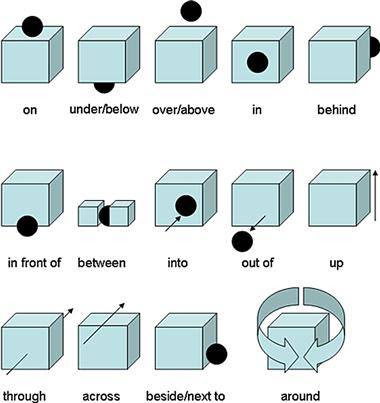
Preposition illustrated by photo


Whether you have difficulties to understand preposition this might 
help you 

Stay connected for other free lesson 

Make sentence using these prepositions 
Read More

Saturday, June 22, 2013

Preposition of place


Copyright © 


Read More

Learn Nationality


Read More

Verb " Have"


Read More

Present of BE- Affirmative Statement ( Koha e Tashme e foljes BE - me qene ) Fjali pohore


Read More

Wednesday, June 19, 2013

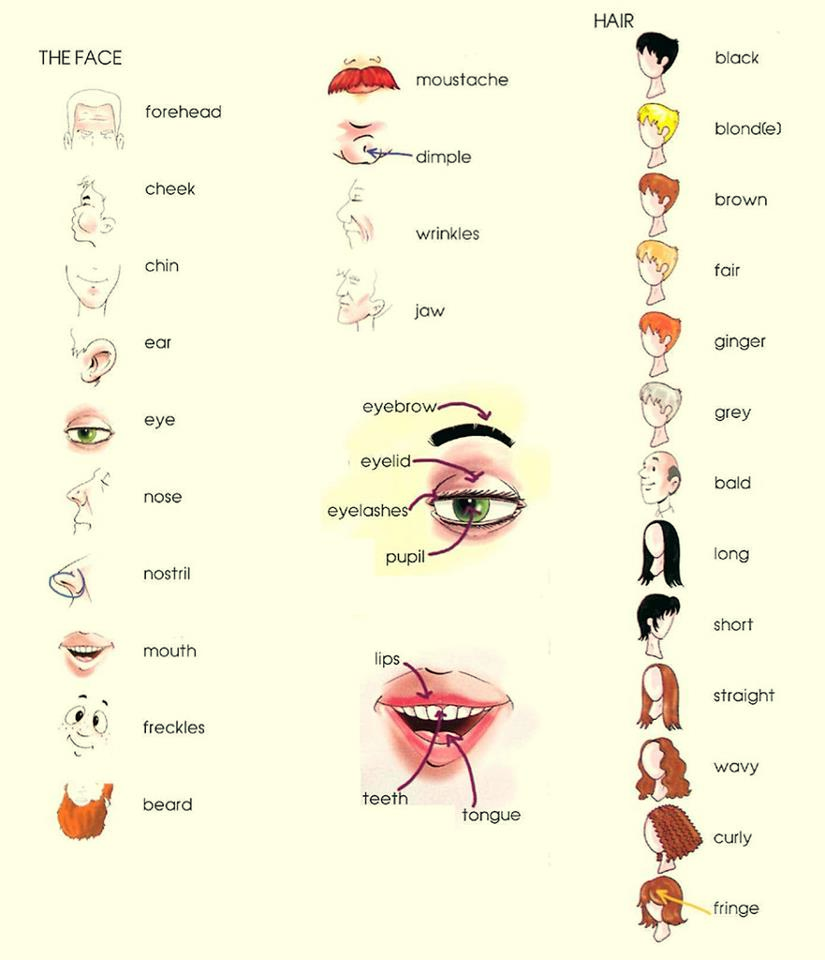
Learn the color, the face, the hair , learn today


For more stuff become a fan of our page in facebook  or  subscribe at blogger page and get the latest tip and learn online for free 
as question 
learn about the face, the color etc 

Read More

Monday, June 10, 2013

Apostrophes ( -s )


What it's Apostrophes and its use 

check this post 

Read More

Pronoun chart


Read More

British English Vs American English


Do you know any other words ???

Do you like more British English than American English ???
Read More

The Four F's


Remember to keep a balance in your classroom by abiding by the rules of the Four F's:

1. Be Fair. 


2.Be Fun.


3. Be Firm. 


4. And, most of all, teach with Feeling.


 Follow these simple rules and you will not Fail.
Read More

Sunday, June 9, 2013

Some grammar rules


Read More

How to Teach English Idioms and Their Meaning


To make sure that the time you spend teaching idioms is not time wasted, follow these steps and instructions:

How To Proceed

  1. 1
    Choose 5 to 8 idioms that may be easily grouped
    Most idioms fall into simple categories, like idioms with animals or parts of the body. Choose 5 to 8 from any category, for example idioms with time. If you choose more than 10, you’ll only succeed in overwhelming your students, and they won’t remember any of the idioms they saw in class. So, to teach idioms with time, you may teach the 8 idioms found in this worksheet called Time Flies When You’re Having Fun. Before presenting the idioms, make sure students understand that they are usually used in spoken English, and rarely in written form, with some exceptions (they are widely used on the Internet, in blogs, ezine articles, etc...but students must understand that their use is informal).
  2. 2
    Introduce idioms in context, never in isolation
    Some ESL teachers simply go over a list of English idioms and their definitions or explanations. However, to ensure that students not only understand them, but also learn to use them, present idiom examples in context, for example, in simple conversations where the meaning of the idiom is clear. To introduce the idiom to give someone a hard time, present a conversation like this one:

    - Juan: Hey Sarah, you look sad. What’s up?
    - Sarah: Well, I didn’t play very well today during volleyball practice, and my teammates were not very understanding. They said I was clumsy and had to focus more on the game. They said a 5-year old girl played better than me.
    - Juan: Oh! I’m so sorry they gave you such a hard time.


    Ask students to guess or figure out the meaning of the idiom. Correct as necessary. Ask them to provide other examples of what it means to give someone a hard time. Then, move on to another conversation for another idiom.
  3. 3
    Students create conversations using idioms
    Remember that the goal is to get students to not only understand idioms, but also learn how to use them effectively. Divide the class into pairs. Each pair of students gets one or two idioms to work with. They must write a conversation and use this idiom in it. Walk around the classroom to assist students and check for accuracy.
  4. 4
    Students act out their conversations
    Each pair stands before their classmates and acts out the conversation they wrote. This way they not only practice using the idiom phrases, they hear other examples from classmates, other ways in which these idioms may be included in conversation.
  5. 5
    Practice with games and activities
    The worksheet for Time Flies When You’re Having Fun provides a matching game and a gap-filling exercise. 
  6. 6
    Use real life, authentic material
    Show students how some of these idioms are used in the media, in newspaper and magazine articles, and in songs, cartoons, videos, advertisements, etc…Thanks to the Internet, all you have to do is Google an idiom, and you’ll find plenty of sources! If you Google, “gave him a hard time”, you'll run across a Daily Mail article that states voters gave a British politician a hard time. You don't have to read the entire article, just the headline and the basics will do for students to see how this idiom is used in a newspaper headline.
Just remember to keep it real. Your students need to know that there are real people out there who actually speak like this, and say these things. Soon enough, they may feel ready to start using some of these themselves.
Read More